Ceramic Coating vs Paint Protection Film: Which Do You Need?
Ceramic coating vs paint protection film (PPF): how each protects paint, what they cost, how long they last, and when it makes sense to use both.
Ceramic coating vs paint protection film is one of the most common debates in car care — and the two get confused constantly. Both protect your paint, both last for years, and both are applied by professionals. But they solve different problems.
The short version: paint protection film (PPF) is a thick physical barrier that absorbs rock chips and scratches. Ceramic coating is a thin, hard chemical layer that repels water, dirt, UV, and contaminants and makes the car easier to keep clean. One isn’t a cheaper version of the other — they’re different tools.
Here’s how they compare, and how to decide what your car actually needs.
What Is Ceramic Coating?
A ceramic coating is a liquid polymer that’s applied by hand, bonds chemically to the clear coat, and cures into a hard, transparent layer measured in microns. Once cured, it:
- Blocks UV rays that fade and oxidize paint
- Resists etching from bird droppings, bug splatter, and tree sap
- Creates a hydrophobic surface that sheds water and dirt
- Adds deep, lasting gloss
- Resists light marring from washing
Because it’s liquid, a coating can go on every painted surface — and on wheels, glass, and trim with the right product.
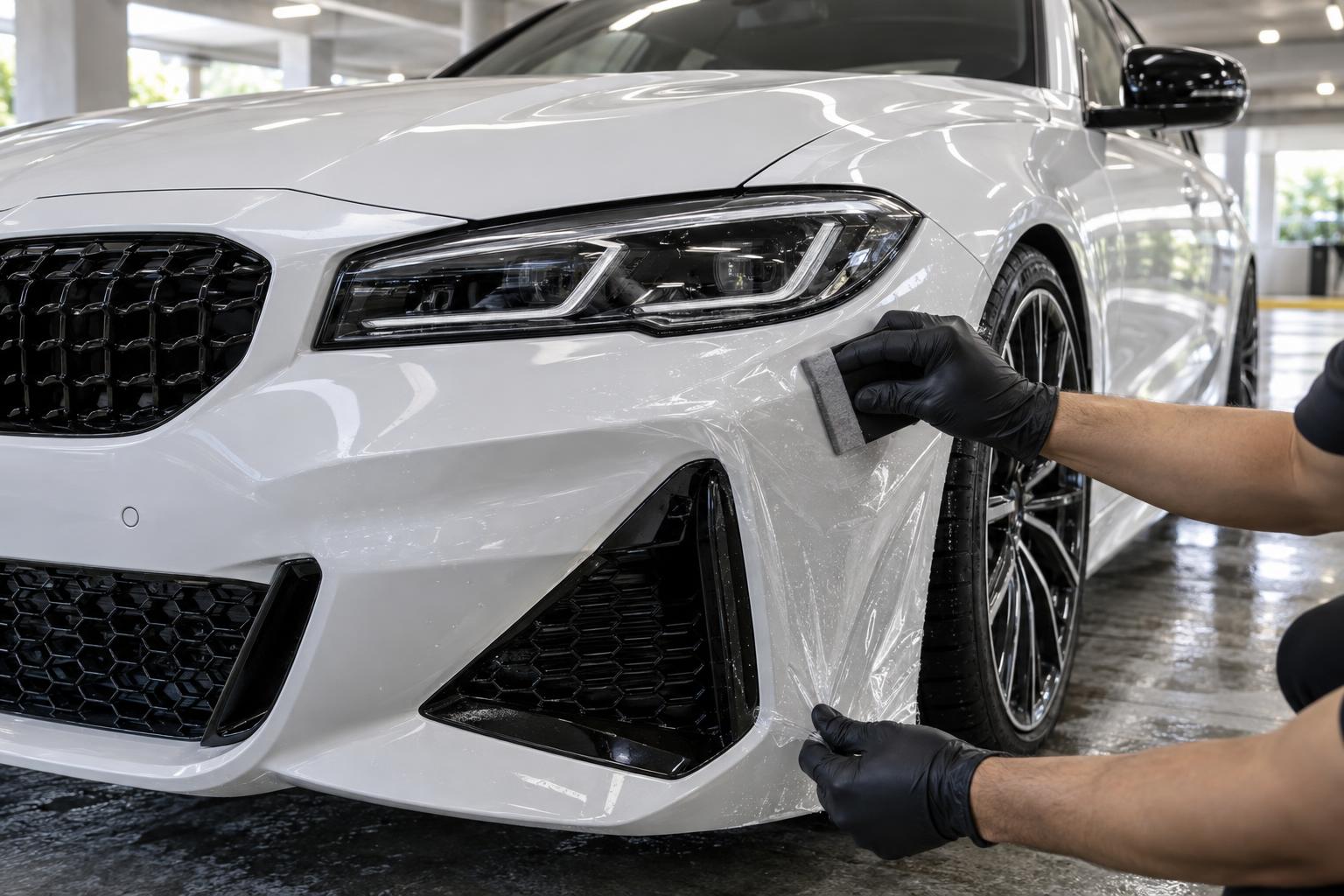
What Is Paint Protection Film (PPF)?
Paint protection film is a clear, flexible urethane film — many times thicker than a coating — that’s cut to fit and stretched over painted panels. Its main job is impact protection:
- Absorbs rock chips and road debris
- Resists scratches, scuffs, and door dings from light contact
- Many modern films “self-heal” light swirls with heat
- Can be removed later without damaging factory paint
Because film is installed panel by panel, most owners cover only high-impact areas: the front bumper, hood, fenders, mirrors, and rocker panels.
Ceramic Coating vs PPF: Side-by-Side Comparison
| Ceramic Coating | Paint Protection Film | |
|---|---|---|
| What it is | Thin liquid polymer that hardens on the clear coat | Thick, clear urethane film applied over paint |
| Rock chip protection | Minimal | Excellent |
| UV and chemical resistance | Excellent | Good |
| Water and dirt repellency | Excellent (hydrophobic) | Moderate unless coated |
| Gloss | Adds deep gloss | Clear; finish depends on the film |
| Coverage | Entire vehicle, plus wheels and glass | Usually high-impact areas only |
| Typical lifespan | Multiple years, depending on product and care | Multiple years, depending on film and care |
| Typical cost | Hundreds to low thousands for the full car | Often more for the front end alone than a full-car coating |
| Removability | Wears down over time or polished off | Can be peeled off |
Cost: Ceramic Coating vs PPF
This is where the two differ most. A professional ceramic coating on a full vehicle typically costs a few hundred to a couple thousand dollars, depending on vehicle size and coating grade. (Our ceramic coating cost guide breaks this down in detail.)
Paint protection film is priced by coverage. Partial front-end coverage alone often costs as much as, or more than, a full-vehicle ceramic coating, and full-body film can cost several times more.
For reference, ceramic coating at Brightside Detailing starts at $600 for a sedan with our 5-Year Dr. Beasley package and tops out at $1,600 for our 25-Year package on the largest vehicles. Full package pricing is on our car detailing pricing page.
Which One Do You Need?
Choose Ceramic Coating If You…
- Want the whole car protected from sun, sap, bird droppings, and water spots
- Park outside and want to slow fading and oxidation
- Want washing to be faster and easier
- Want maximum gloss
- Mostly drive around town rather than long highway stretches
Choose PPF If You…
- Drive a lot of highway miles and keep getting rock chips on the front end
- Own an exotic or high-value car where any chip is a big deal
- Need protection against light physical scratches and scuffs
Consider Both If You…
Many enthusiasts combine them: PPF on the high-impact front panels, and ceramic coating over the film and the rest of the car. The coating makes the film easier to clean and more hydrophobic, while the film handles impacts the coating can’t.
What About Texas Heat?
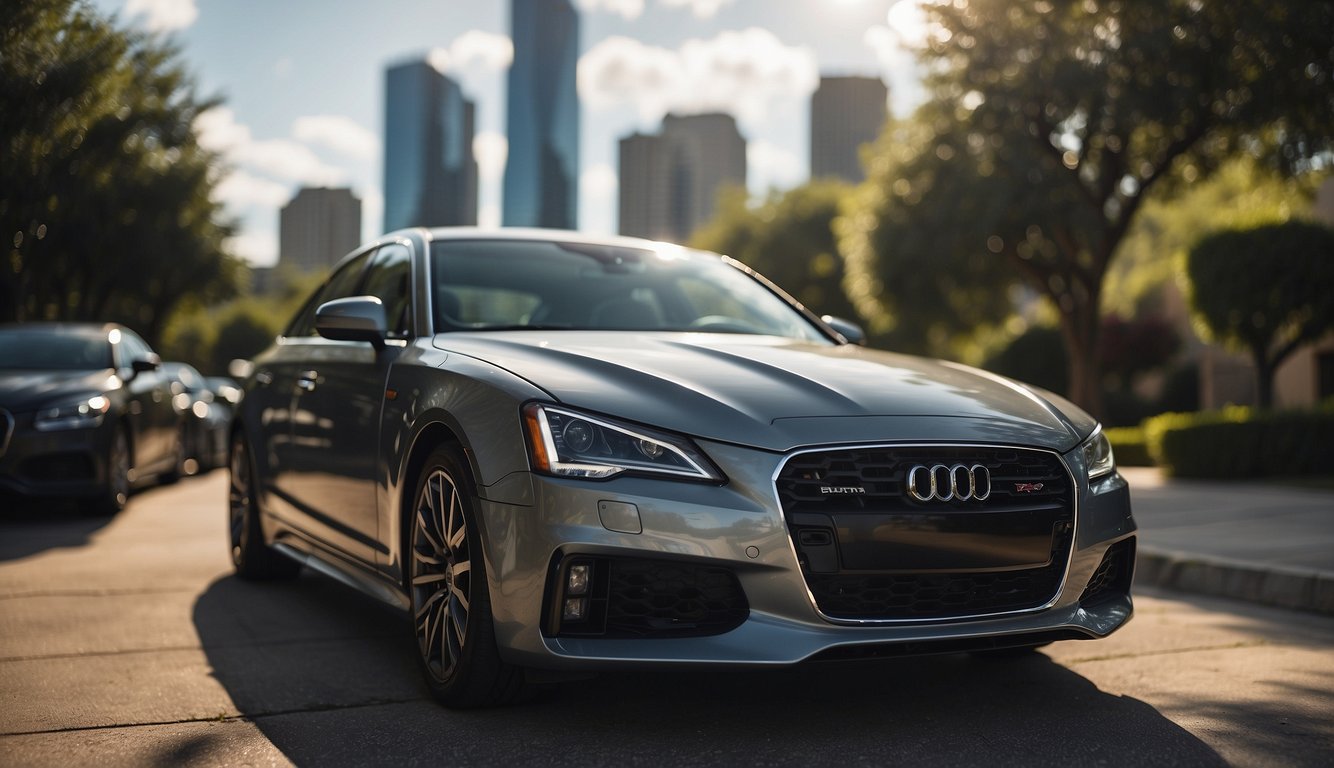
Hot, sunny climates make UV and chemical protection a priority. In Central Texas, the sun, heat, pollen, and tree sap are a constant threat to unprotected clear coat — exactly what a ceramic coating is built to resist.
Heat also matters during application. Coatings set faster on hot panels, so they should always be applied in the shade with cool paint. At Brightside, we apply ceramic coating in Austin at your home or office in a garage, carport, or covered parking spot so it cures evenly.
Key Takeaways
- Ceramic coating is a thin chemical layer for UV, contaminant, and water protection — and easier washing — across the whole car.
- PPF is a thick physical film for rock chips and scratches, usually on the front end.
- Coating costs much less for full-vehicle coverage; film costs more but handles impacts.
- For many drivers, a coating alone is the right call. If highway rock chips are a constant problem, PPF on the front plus a coating everywhere is the strongest combination.
Still on the fence about coating at all? Read is ceramic coating worth it, or call 512-890-2414 for a free consultation.
Frequently Asked Questions
Is PPF better than ceramic coating?
Neither is better overall — they do different jobs. PPF is better at stopping rock chips and scratches. Ceramic coating is better at repelling water and dirt, resisting UV and chemicals, and adding gloss across the entire vehicle.
Can you put ceramic coating over PPF?
Yes. Coating over film is a common combination. The coating makes the film more hydrophobic and easier to clean, and helps protect the film itself from staining.
Does ceramic coating prevent rock chips?
No. A ceramic coating is far too thin to absorb the impact of road debris. It resists light marring from washing, but for rock chip protection you need paint protection film.
Which lasts longer, ceramic coating or PPF?
Both are rated for multiple years, and lifespan depends heavily on the specific product and how the car is maintained. Long-life coatings, like a 25-year coating with proper care, can outlast many films.